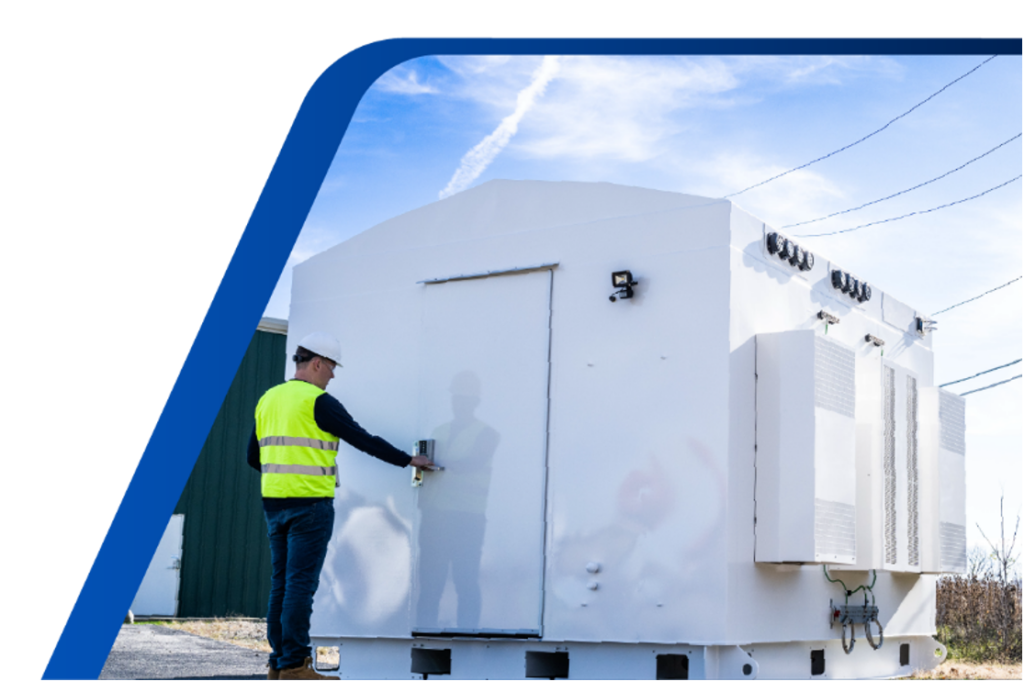

A modular data center lets operators stand up compute, transport, and power at the network edge in weeks. A poured-concrete shelter, by contrast, can demand a year or more. That speed matters now, because AI inference, 5G, and cloud workloads are pushing infrastructure into the field. Analysts expect the edge data center market to reach roughly $105.8 billion by 2033, growing about 14.9% a year. In this article, you will learn where traditional builds break down. You will also see what those delays cost, and how the ABS HyperEdge MDC hardens the edge site.
Key Takeaways
- A modular data center ships factory-integrated, so on-site labor and deployment time both drop sharply.
- Traditional concrete edge builds can run 18 to 24 months; modular delivery can land in roughly three.
- The HyperEdge MDC weighs about 13,000 lbs at 10′×20′, versus concrete that can exceed 40,000 lbs.
- Lower weight cuts freight costs up to 40% and removes the need for specialized heavy cranes.
- Welded steel construction adds seismic, wind, snow, and up-to-two-hour fire performance.
The Problem in the Field
Edge sites rarely cooperate. They sit on remote pads, tight urban lots, or seismic and high-wind ground, yet operators still need datacenter-grade reliability there. Conventional concrete shelters force a hard choice, because each one requires civil work, multiple contractors, and long on-site assembly. As a result, a single edge facility can take 18 to 24 months to bring online. Meanwhile, bolted-panel enclosures introduce leakage points at every seam, which lets weather and contaminants reach sensitive electronics. So the very structure meant to protect the network often becomes the slowest, most fragile part of the deployment.
What the Delays Really Cost
Those delays carry a price that extends well past the build schedule. First, concrete is heavy — often over 40,000 lbs — so it demands specialized cranes and reinforced transport on every move. Consequently, freight and rigging costs climb before a single rack powers up. In addition, drawn-out timelines tie up capital and push back revenue from the new site. Industry data shows modular approaches can compress schedules by 40 to 50% against traditional builds. Therefore, the real comparison is not just sticker price. Instead, it is total cost of ownership across freight, labor, schedule, and operating expense.
The Amphenol Solution: HyperEdge MDC
The ABS HyperEdge MDC answers those problems with a factory-integrated modular data center built for the field. Because cabinets, racks, power, and thermal systems arrive configured as one coordinated system, on-site labor falls and deployment accelerates. Moreover, the enclosure houses compute racks, transport equipment, battery banks, and cable conveyance together, with pre-configured AC power and complete fiber management. Operators can also right-size the footprint, since standard sizes run from 6′×6′ up to 24′×36′, with custom builds available. The same platform serves inline amplification sites, cross-connect hubs, meet-me rooms, and hyperscale edge facilities — so one product line covers many roles.
Engineered to Survive the Site
Durability is where welded steel earns its place. Unlike bolted panels, welded construction eliminates the seam leakage points that let weather in, and it meets seismic requirements without weak joints. Furthermore, the steel design supports higher wind and snow loading. It also enables a fire rating of up to two hours — well beyond aluminum. Thermal performance scales the same way. The CTMS system supports HVAC units from 4,000 to 35,000 watts each, so operators add cooling as load grows. Finally, lighter weight cuts freight costs up to 40% and lets standard equipment handle placement, which removes the heavy-crane line item entirely.
Bottom Line
A modular data center like the HyperEdge MDC delivers datacenter-grade durability at the edge while cutting the weight, freight, crane, and schedule costs that make concrete shelters so expensive to deploy.
Frequently Asked Questions
What is a modular data center?
A modular data center is a factory-integrated enclosure that houses compute, transport, power, and cooling as one coordinated system. It ships pre-configured, so crews install it far faster than they can pour and fit out a concrete shelter on site.
How is a modular data center different from a traditional concrete shelter?
A concrete shelter is built and assembled largely on site, which adds civil work, weight, and time. A modular data center arrives integrated from the factory, which lowers on-site labor, reduces transport weight, and shortens deployment from many months to a few.
How much faster is modular deployment?
Traditional edge builds often take 18 to 24 months. Factory-built modular solutions can reach operation in roughly three months, and industry data shows schedule reductions of 40 to 50% versus conventional construction.
How much lighter is the HyperEdge MDC than concrete?
A 10′×20′ HyperEdge MDC with four HVAC units weighs about 13,000 lbs, while comparable concrete can exceed 40,000 lbs. That lower weight cuts freight costs up to 40% and lets standard equipment handle placement without specialized cranes.
Is a steel modular data center durable enough for harsh sites?
Yes. The HyperEdge MDC uses welded steel that meets seismic requirements, handles higher wind and snow loads, eliminates bolted-panel leakage points, and supports a fire rating of up to two hours.
Can a modular data center scale as my load grows?
Yes. The CTMS thermal system supports HVAC units from 4,000 to 35,000 watts each, and the modular design lets operators add thermal and rack capacity over time — a true pay-as-you-grow approach.
Where can a HyperEdge MDC be deployed?
It supports inline amplification (ILA) sites, cross-connect hubs, meet-me rooms, and hyperscale edge data centers, with mounting kits for pad, helical, and riser foundations to fit nearly any site condition.
Planning an edge build? Talk to the ABS product team about a HyperEdge MDC configured for your racks, thermal load, and site conditions — or download the HyperEdge MDC Ordering Guide to scope part numbers and options.
Call 1-800-677-2288 or visit amphenolbroadband.com.
Check out the WIC here